A small area on a map can still make a full day. A useful Old San Juan walking plan begins with your group’s pace, the actual route and the place you most want to visit. It does not need to begin with the longest possible list of landmarks.
Choose one main commitment
Decide whether the day centers on a fort, a cultural institution or street-level exploration. That choice determines what else fits comfortably. If a venue is the main reason for the visit, check its current access and visitor information before arranging the rest of the day.
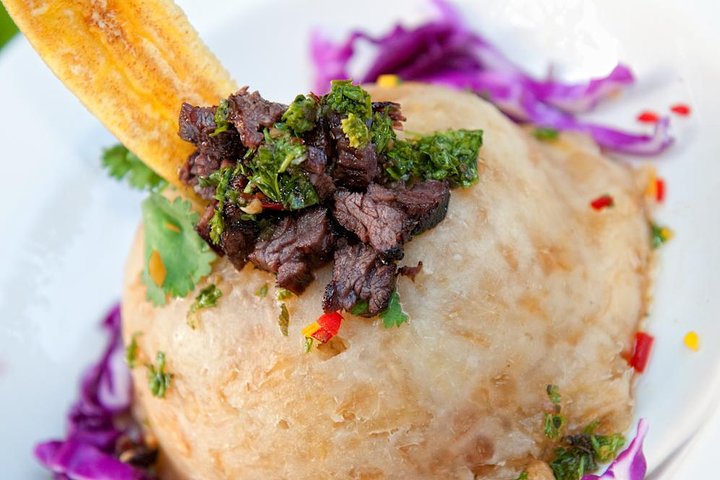
Authentic Flavors of San Juan Food Tour
Join your host for a 3-hour culinary exploration of staples like single-origin Puerto Rican coffee, Caribbean sourced chocolate, street food and mojit...

Old San Juan Walking Tour
Note: Participants must be capable of walking long distances. Discover the beauty of Old San Juan with writer David...

Jet Ski Tour through San Juan Bay (21 years old to rent)
*Scenic Views: Participants can enjoy breathtaking views of the historic San Juan skyline, including colorful buildi...

Explore Old San Juan Walking Tour
Walk the Historical city of old San Juan on a guided tour, going back in time over 500 years. Starting at Plaza Colo...
The National Park Service provides specific accessibility information for San Juan National Historic Site. Use that source for park facilities and ask about the areas relevant to your group. It should not be treated as a blanket assessment of every street, building or business in the neighborhood.
Source: National Park Service accessibility information. Reviewed 14 September 2026.
Plan the pauses as well as the movement
A meal, a drink of water and somewhere to sit are part of a sensible day, not evidence that the itinerary has failed. Put a flexible interval around your main commitment. That gives the group a chance to decide what still feels worthwhile rather than following a plan after it stops being comfortable.
Think about the return early. If you have an onward departure or a fixed meeting time, work backward from that obligation and leave margin. A guide’s suggested sequence should never replace the actual instructions of your transport or tour provider.
A framework you can adapt
| Part of the day | Decision to make |
|---|---|
| Arrival | Choose a clear meeting point and understand the route from your actual arrival location. |
| Main visit | Confirm the exact venue, access arrangements and the amount of attention you want to give it. |
| Pause | Leave time for food, water and a place to sit without a rushed next appointment. |
| Optional chapter | Add a street or plaza only if the group still wants it. |
| Return | Keep the final journey and any fixed departure separate from sightseeing time. |
Ask about the exact route
If you are choosing a guided walk, ask where it starts and ends, which places it enters, what walking surfaces or steps are involved and how the pace is managed. A short duration or broad difficulty label cannot answer every traveler’s needs.
For a group with different interests, agree on the main purpose before booking. A history-focused walk, a food experience and a general orientation may have very different rhythms. Compare the content and arrangements, not just the list of named sights.
Keep the street shared
Use the space with awareness of other people’s daily routines. Pause where you do not block an entrance or circulation route. Be attentive to the surroundings while looking at buildings or taking photographs, and follow current local instructions and site restrictions.
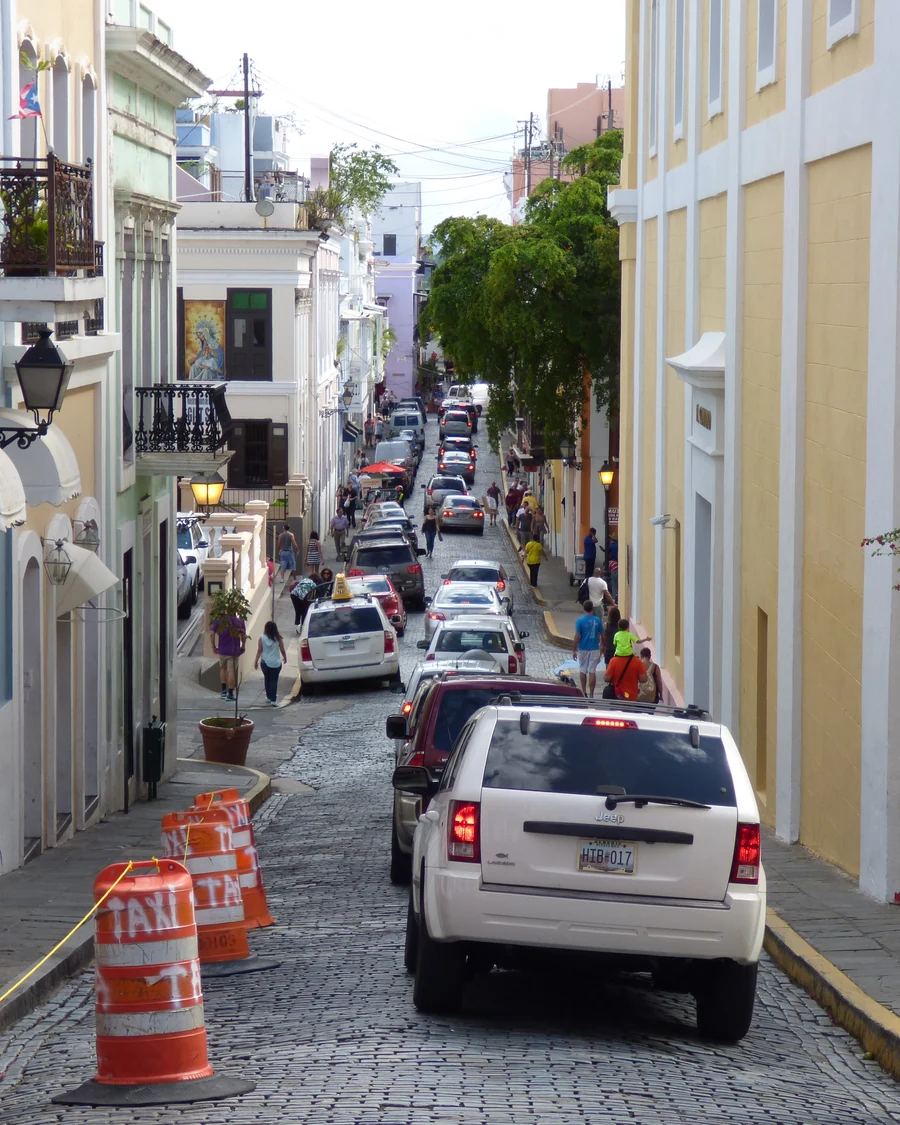
The photograph here, taken by MusikAnimal in January 2015, shows a street with pedestrians and traffic. It is included as a reminder of an inhabited city, not a current route-condition report.
Leave something for another day

Top Rated El Yunque Rainforest & Waterslide – SmallGroup Tour
Adventure into the rainforest on a historical journey where you'll discover various natural wonders. Complimentary transportation from San Juan is inc...

San Juan Guided Turtle Snorkel Tour and Complimentary Videos
Dive into the ultimate snorkeling experience in San Juan, Puerto Rico, where you can swim with sea turtles in clear...

Cave, Waterfall and River Adventure in Charco Azul from San Juan
This is an absolutely unforgettable experience. This day trip has it all: adventure, pristine tropical rivers, water...

El Yunque Tour with Luquillo Lunch Stop and Transport: 6 ppl Max
Our certified guides go above and beyond to create an unforgettable experience for you! We focus on tours with exclu...
Our suggestion is to finish with enough energy to remember what interested you. A shorter, attentive walk can be more satisfying than a completed checklist. Explore streets and plazas for one thread, and the accommodation guide for the repeated journeys around it.